


Written by Dr Elizabeth Coombes, Course Leader MA Music Therapy at the University of South Wales, this blog highlights the impactful work of music therapists, staff, and students at the University of South Wales, showcasing research and practice that support individuals across diverse communities. It also illustrates how the programme’s social justice focus and blended learning approach enable students from varied backgrounds to contribute meaningfully to music therapy in Wales and beyond.
World Music Therapy Week is celebrated annually between 10 – 15 April, bringing more awareness to our profession. Music Therapists in the UK are HCPC registered Allied Health Professionals. We work with service users whose lives have been affected by injury, illness or disability. Participation in music therapy supports peoples’ psychological, emotional, cognitive, physical, communicative and social needs. Music therapy helps people to engage with the music therapist in a range of music-based activities such as music creation, song writing and listening to music, all within the context of a therapeutic relationship.
The MA Music Therapy course is the only one of its kind in Wales, and this auspicious week gives us the chance to share some of the important work being done by music therapists and music therapy student in Wales.
Our staff team have a range of widely differing research and practice interests. Family-based music therapy groupwork with forcibly displaced service users from Ukraine and Afghanistan and other conflict zones has focussed on reduction of trauma symptoms for children and adults. We also found that the groups helped children develop their language and social play skills.
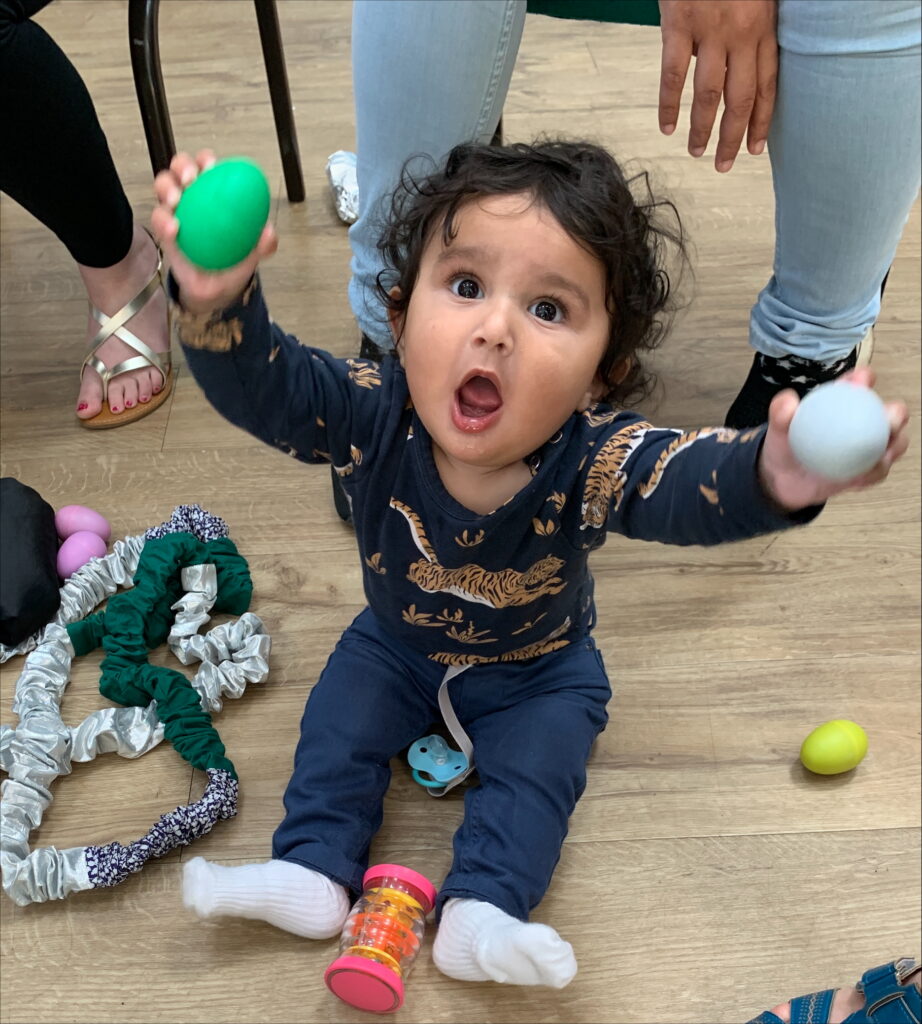
Group Music Therapy Intervention with Afghani and Ukrainian Caregiver Refugees and their Toddlers Film
Working with parents of premature babies to explore how they themselves can support their babies during hospital admissions also showed how this helped parents feel more connected to their children and reduced their own anxiety.
Graduates have contributed to research in how aphasia-friendly choirs can help people regain their voice. Aphasia is a condition that affects a person’s ability to communicate and often occurs after a stroke or brain injury. This project found that these groups helped patients and staff strengthen their relationships with each other and work towards improving communication.
Our MA Music Therapy students deliver hundreds of therapy sessions and community workshops each year in their locales. And because our course has a strong social justice focus coupled with a blended learning structure, we can offer an accessible place to learn. We believe that our music therapy course offers a place where people who are marginalised or disadvantaged in our society can find equality of opportunity and place where they can thrive on our training. This experience is exactly what the music therapists of the future will offer to members of our communities once they are delivering music therapy. This structure and focus encourages students from a wide range of backgrounds and geographical locations to learn with us, and to become part of the local, national and global music therapy community.
Check out our profession’s website to learn more British Association for Music Therapy: Music Therapy!
Get in touch
If you want to know more about this, get in touch!
Share this page
Other blogs

Race Equity Month – Navigating Racism from Both Sides: A Student Reflection on Peer Support and Inclusivity
A guest blog from Divanshi Sharma, Nursing Adult Student from the University of Roehampton. Divanshi is also a…
Domain 1: Responsibility and Accountability
All members of the AHP community need to be aware of the competencies required for their role as an…
Domain 2: Diverse and Inclusive leadership
Respect for the diversity of learners is at the core of educator practice. A commitment to developing equitable…
Domain 3: Community and Co-production
Co-creating learning opportunities and ensuring that the voices of learners and the end users of any service are…
Work with us
Collaboration
The Council collaborates with education providers, charities, government organisations and arms-length bodies, healthcare providers, and professional bodies to enhance healthcare education and workforce development.
Funding projects
The Council has worked with a number of external organisations who have funded specific projects. We are open to exploring opportunities that the Council is uniquely placed to deliver and that support the work of the Council and its members.
Memorandum of understanding
The Council uses memoranda of understanding with external organisations and networks to support collaboration on areas of mutual interest.
Supporting bids
The Council is open to working with members and stakeholder organisations to support bids for externally funded projects.