


In this blog, Sharon Hardwick, Associate Professor in Paramedic Science, reflects on Birmingham City University’s commitment to Paramedic Science particularly with the introduction of simulation facilities and a partnership with the West Midlands Ambulance Service. She also highlights the impact these opportunities have on student learning and outcomes.
Birmingham City University (BCU) is an established provider of undergraduate paramedic education. Our partnership with West Midlands Ambulance Service means our students get to undertake clinical placement with a leading ambulance service who is at the forefront of pre-hospital care developments. They also get to use the outstanding simulation facilities.
Our state-of-the-art ‘Simbulance’ gives students the opportunity to simulate a wide range of scenarios in a safe environment. Given the challenges faced by ambulance services and wider NHS regarding waiting times at hospital, simulation is now even more vital to a student’s learning.
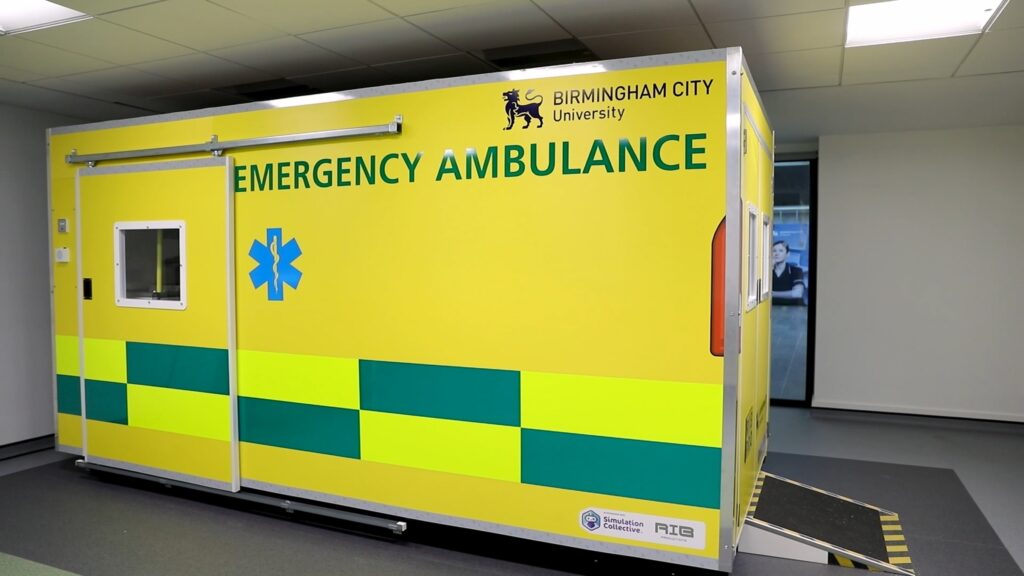
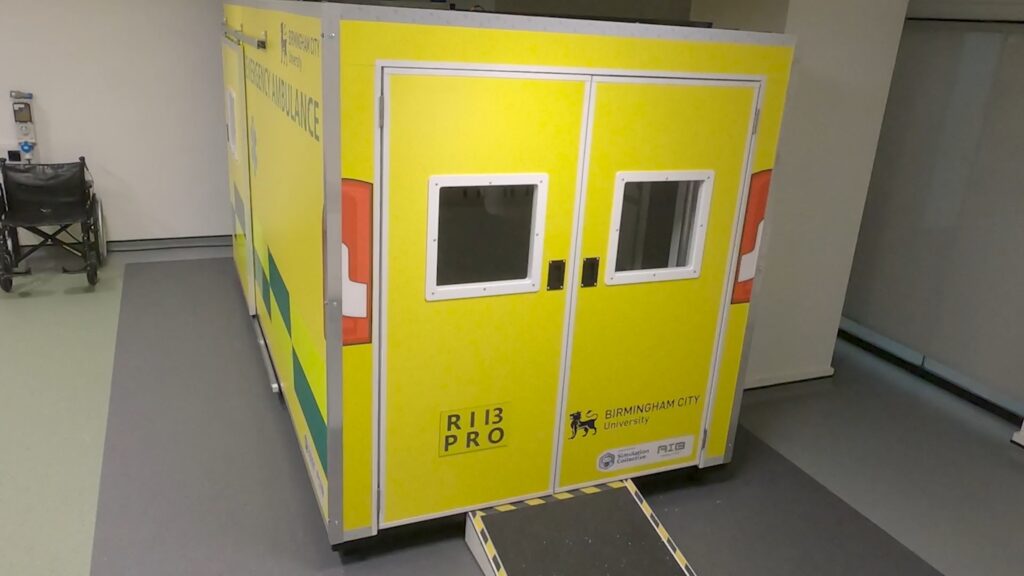
During their studies with us at BCU, students study a number of theoretical and practical modules. Learning about the role of paramedics and the treatment they will provide to patients in their care. They are then able to put this theoretical learning into practice, mastering these skills under the guidance of the teaching teams. Lecturers are all registered paramedics and nurses and offer a wealth of knowledge and experience to the students. When working with the ambulance service, the students work with qualified mentors who supervise them while putting this theoretical and simulated knowledge into practice out in the community.
Sharon Hardwick, Associate Professor in Paramedic Science said:
“Simulation is such an integral part of the student paramedic learning experience. Allowing the students to learn in a safe lecturer-led environment means that they can practice their skills and clinical decision making, while also receiving lecturer and peer feedback.
“We pride ourselves on the support provided to students throughout their journey, which results in high employability for our Paramedic Science students. On average, over 94 per cent of graduates from the course in 2020 to 2023 went on to highly skilled employment, further study or other positive outcomes (Office for Students). Those who go on to study at a more advanced level are ultimately having a positive impact on the standard of patient care, which is what we’re all here for.”